Notice of the reopening of the Breuer Building as an arm of
the Metropolitan have replaced the "We've Moved!" sign at the former Whitney Museum building
Almost two years ago I moved for the first time in nearly 40 years. I left the apartment into which I had moved, with my mother, when I was a young graduate student and went about ten blocks away, to a building designed specifically for people over 55. It was a move that could not have come at a worse time in my life. I accepted the apartment about two weeks before I was diagnosed with breast cancer. Preparing for the move took place at the same time as preparations for a mastectomy and continued during painful complications from the surgery and the opening rounds of chemotherapy. That it was accomplished at all is due to the love and support and material help from friends who gave me their time, their energy, their sweat and even their money. I can never repay any of them for their generosity, except with my prayers.
Even though in the same general area of Manhattan as my old home (i.e., the Upper East Side) my new one is in what is sometimes referred to as "west of Third Avenue" (i.e., the more expensive half of the UES, between Third and Fifth Avenues). And some of my new neighbors are indeed exalted. There are cultural institutions like the Frick or the former Whitney (soon to be the Met Breuer) museums. Eleanor Roosevelt died around the corner. The French embassy is two blocks away. Prince William and Princess Kate could have waved to me from the windows of the Carlyle Hotel. And next week Pope Francis will be sleeping around the corner.
Blocks piled at 71st and Fifth
While the opening week of the United Nations General Assembly every year always brings Manhattan to a virtual halt, throwing the Pope into the mix compounds the chaos exponentially. And the security plans for this papal visit seem rather outrageously overdone. Possibly because Francis does not want to use the popemobile security concerns have resulted in the issuance of tickets (tickets!) that will be required just to stand on the street or in Central Park to watch him drive by. That's insane!
Blocks at 72nd and Fifth
I remember the first papal visit, by Pope Paul VI, in 1966. I went with my mother to Central Park to watch him drive by. No one needed tickets for it, you just showed up. It was the same with the two visits by Pope St. John Paul II. On his first visit in 1979 he drove down the block I was working on (East 49th Street) and we all went downstairs to see him. Later the same day he drove up Madison Avenue and I caught another glimpse of him as I walked home. No tickets required. My cousin staked herself out in front of the papal mission for the entire day. It was the slow death process of that same cousin that prevented me from attempting to catch a glimpse on his second visit in 1995. But on a trip to Rome in 1988 I was lucky enough to attend a beatification ceremony at St. Peter's, which more than made up for that.
Blocks piled mid-block between Fifth and Madison Avenues
For Pope Benedict's visit in 2008 I caught glimpses on Park Avenue and on Fifth without a ticket. I did have a ticket for Mass at Yankee Stadium, the only time I've ever tried to get a ticket for one of the actual papal events in New York. None of this will be possible this time around, all due to security concerns.
Already preparations are underway. In the last few days the police department has begun delivering huge concrete blocks to the corners of 72nd Street (where the residence of the papal mission to the UN is located). See some of the piles of blocks in the accompanying photos.
Blocks at 72nd and Madison Avenue
Streets will be blocked off, including my street. I wonder if I will have to show proof of residence just to get back home next Thursday and Friday, something I never had to worry about on my old block.
Sometimes living near the scene of the action can be one big headache.
Saint Peter and His Successors From a Fleur des histoires by Jean Mansel
France, c. 1475-1500
Paris, Bibliotheque nationale de France
MS Francais 56, fol. 159v
On this day we experienced an amazing and historic event, the canonization
of two Popes, John XXIII and John Paul II, by the currently
reigning Pope Francis, in the presence of Benedict XVI, his own still-living predecessor, a man who
was a close collaborator of one of the new saints. The new saints are men both of whom we of the older baby boomers cohort have known through television and may even have seen with our own eyes. Nothing exactly like this has ever happened
in the nearly 2,000 year history of the Church.
Thinking about this convergence
of four Popes, two living and two newly proclaimed saints, I found myself
pondering the question of papal iconography.
Is there such a thing?
Certainly our new saints, Pope Saint John XXIII and Pope Saint John Paul II, will not have anything approaching an iconography. No modern saint does, with the possible
exception of Saint Therese of Lisieux. Following
the advent of the photograph in the late nineteenth century, the actual
face of a saint is generally available and it is this that forms what
iconography there is for the majority of modern saints. But has there ever been a distinctive papal iconography? So, I set out to take a look at what did
exist. What I found was surprising.
Apart from the papal keys, the symbolic “triple tiara” and
the distinctive papal apparel of white and red that has prevailed since the
middle ages there is almost no specifically “papal” iconography, i.e., an
iconography that is applicable to all popes across time. Most images of popes from the middle ages up
to the advent of the photograph fall into a few specific categories, none of which can really be considered to be an iconography.
The Portrait
Popes Innocent and Callixtus with St. Lawrence From an Apse Mosaic
Italian, c. 1140-1143
Rome, Church of Santa Maria in Trastevere
The portrait is at once both the most ubiquitous and the least
interesting image of the popes. Medieval
images are nearly identical whether they attempt to present an idealized image of a long dead pope or an attempt at actual portraiture in the case of
a contemporary pope .
No one actually expected a portrait that looked exactly like an actual human being. All the “portraits” were idealized in large measure. So we cannot say for certain what any early or medieval pope really looked like.
Master of the Morgan Infancy Cycle, Saint St. Gregory the Great From a Book of Hours
Netherlands (Delft), c. 1415-1420
New York, Morgan Library and Museum
MS M866, fol. 146v
Sandro Botticelli, Saint Sixtus II
Italian, 1481
Vatican, Sistine Chapel
The situation changes with the Renaissance. Actual resemblance to the living person was
expected for portraits of living popes, as for any other person. Consequently, from about the middle of the
fifteenth century we have a pretty good idea of what a then living pope looked
like.
Melozzo da Forli, The Foundation of the Vatican Library
Italian, 1477
Vatican, Pinacoteca
This fresco, commemorating the foundation of the Vatican Library, actually includes the portraits of two popes, one of them current, the other a young man who became pope. We see Pope Sixtus IV seated as he appoints the humanist Bartolomeo Platina as the first Librarian of the newly founded Library. Standing between them is the Pope's nephew, Cardinal Giuliano della Rovere, the future Pope Julius II, famous as the patron of Michelangelo.
Left - Raphael, Portrait of Right - Gianlorenzo Bernini, Pope Julius II Portrait of Pope Urban VIII
Italian, c. 1512 Italian, c, 1632
Florence, Gallerie degli Uffizi, Rome, Galleria Nazionale d'Arte
Diego Velazquez, Pope Innocent X
Spanish, c. 1650
Rome, Galleria Doria-Pamphili
Carlo Maratti, Pope Clement IX
Italian, 1669
St. Petersburg, Hermitage Museum
Anton Raphael Mengs, Pope Clement XIII
German, 1758
Venice, Museo del Settecento
Jacques-Louis David, Pope Pius VII
French, 1805
Paris, Louvre
But, apart from the distinctive
papal clothing, there is virtually no difference between these portraits and
those of contemporary secular persons.
A subcategory of portraiture is tomb and monument sculpture. The same general observations apply here as
in painting.
Antonio Pollaiuolo, Tomb of Sixtus IV
Italian, 1384-1493
Vatican, St. Peter's Basilica
Antonio Canova, Tomb of Clement XIII
Italian, 1792
Vatican, St. Peter's Basilica
Ignazio Jacometti, Pope Pius IX in Prayer
Italian, 1880
Rome, Basilica of Santa Maria Maggiore
Historical scenes
Probably the largest number of images of popes fall into a category
that we might call the historical.
Giotto, Confirmation of the Franciscan Rule
Italian, c. 1297-1300
Assisi, San Francesco, Upper Church
Given
the importance of the papacy for the Church and, subsequently, for post-Roman
Imperial European history, this is not surprising.
Jean Fouquet, Coronation of Charlemagne From Grandes Chroniques de France
French, c. 1344-1460
Paris, Bibliotheque nationale de Paris
MS Francais 6465, fol. 89v
Since the first century popes have borne the
burden of representing Christ in the world.
Some have been martyred, some have crowned emperors, others have had
important roles to play in the approval of new religious orders, some have founded famous monuments, others have
been peacemakers in conflicts, and some have preached the need for Crusades.
Master Francois, Eleanor of Aquitaine, Queen of England, Before Clement III
French (Paris), c. 1475
The Hague, Koninklijk Bibliotheek
MS MMW 10A11, fol. 181v
Pope Benedict XII Preaching the Crusade From a Chronicles of Froissart
French (Paris), c. 1425-1450
Paris, Bibliotheque nationale de France
MS Francais 2675, fol. 37v
Jacopo Zucchi, The Founding of Saint Mary Major
Italian, 1580
Vatican, Pinacoteca
Raphael and assistants, The Meeting Between Leo the Great and Attila
Italian, 1514
Vatican, Apostolic Palace, Stanza di Eliodoro
Since the fourth century all the popes have been
important statesmen. The interaction of various popes with the
world, both the secular and religious spheres, has offered artists plenty of
opportunities to present many stories.
Spinello Aretino, Pope Alexander III Receiving an Ambassador
Italian, 1407
Siena, Palazzo Publico
Master of the Mazarine and assistants, Pope Benedict XII Receiving Messangers from China
French (Paris), c. 1410-1412
Paris, Bibliotheque nationale de France
MS Francais 2810, 134v
Giovanni di Paolo, Saint Catherine of Siena Before the Pope at Avignon
Italian, c. 1460
Madrid, Museo Thyssen-Bornemisza
Legendary Events
In addition to real, historical, events in which the popes have participated, there are legendary ones that also offered opportunities for an iconography to develop.
Such are images from the legend of St. Ursula (which never happened),
Carpaccio, St. Ursula and Pilgrims Meet the Pope
Italian, ca. 1482
Venice, Galleria dell'Accademia
the Mass of St. Gregory (which may have happened)
Simon Marmion, The Mass of Saint Gregory
From a Book of Hours
Belgian, c. 1475-1485
New York, Morgan Library and Museum
MS M6, fol. 154r
and the apparition of the Archangel Michael
on top of the tomb of Hadrian (thereafter known as the Castel Sant’Angelo).
Jacopo Zucchi, The Procession of Saint Gregory
Italian, 1580
Vatican, Pinacoteca
Allegories
Allegorical images form yet another category.
Anonymous, Pope Nicholas III Presented to Christ by Saints Peter and Paul
Italian, c. 1278-1279
Rome, Basilica of San Giovanni in Laterano, Sancta Sanctorum
Raphael and Assistants, Pope Urban I Between Justice and Charity
Italian, c. 1520-1524
Vatican, Apostolic Palace, Sala di Constantino
Giorgio Vasari, The Tribute of the Nations to Paul III
Italian, 1546
Rome, Palazzo della Cancellaria
These allegorical images may be either positive or
negative. The negative ones remind us
that everyone, even popes, can be either saints or sinners.
Jan van Eyck, The Adoration of the Mystic Lamb Center of the Ghent Altarpiece (detail)
Flemish, c. 1425-1429
Ghent, Cathedral of St. Bavo
In this image three popes are counted among the saints in adoration of the Lamb of God in the heavenly Jerusalem.
The Triumph of Death From a Danse macabre
French (Paris), c. 1500-1510
Paris, Bibliotheque nationale de France
MS Francais 95, fol. 23
This image, dating from the period in which the
plague was a frequent event, reminds the viewer
that death comes for popes, kings and cardinals
as well as for others.
Master of Coetivy, A Scene from Inferno
From a Divine Comedy by Dante
French (Paris), c. 1450-1466
Paris, Bibliotheque nationale de France
MS Italien 72, fol. 1
This pope is in Hell, paying the penalty for a bad life.
And some negative images, dating from the time of the Reformation, are
actual attacks on the Catholic Church.
Albrecht Duerer, Passional Christ and Antichrist
German, 1521
London, British Library
Duerer's picture echoes one of the original complaints of the early "Reformers". In the image Jesus chasing the money-changers from the Temple is contrasted with a pope overseeing the counting of money while signing what are probably to be understood as indulgences.
The Bridge
A final category is one that I call the Bridge. After all, one of the titles of the popes is “Pontifex Maximus” (Greatest Bridgebuilder), a title borrowed directly from ancient Roman religion when it was borne primarily by the Roman Emperor in his role as a high priest of the pagan cult.
Guercino, Pope Saint Gregory the Great with
Saints Ignatius Loyola and Francis Xavier
Italian, c. 1626
London, National Gallery
Master of the Duke of Bedford, Saint Gregory the Great Inspired by the Holy Spirit
From the Grandes Heures of Jean de Berri
French (Paris), 1409
Paris, Bibliotheque nationale de France
Latin 919, fol. 100r
The popes as a bridge connect the earth and heaven. These are the images of popes shown among
other saints, or as an adorer of the Lord, as an inspired writer or as a
supporter for a presentation of a donor figure to a divine one.
Titian, Alexander VI Presenting Jacopo Pesare to Saint Peter
Italian, c. 1506-1511
Antwerp, Koninklijk Museum voor Schone Kunsten
Albrecht Duerer, The Adoration of the Holy Trinity
German, 1511
Vienna, Kunsthistorisches Museum
Giovanni Battista Tiepolo, Pope Saint. Clement Adoring the Trinity
Italian, c. 1737-1738
Munich, Alte Pinakotek
Raphael, Disputa
Italian, c. 1510-1511
Vatican, Apostolic Palace, Stanza della Segnatura
We do not expect to see one of our new papal saints
presented as part of a legend or in an allegory, but perhaps we may see them in
their papal role in historical events and most definitely as bridges between
our own earthly reality and their current heavenly reality.
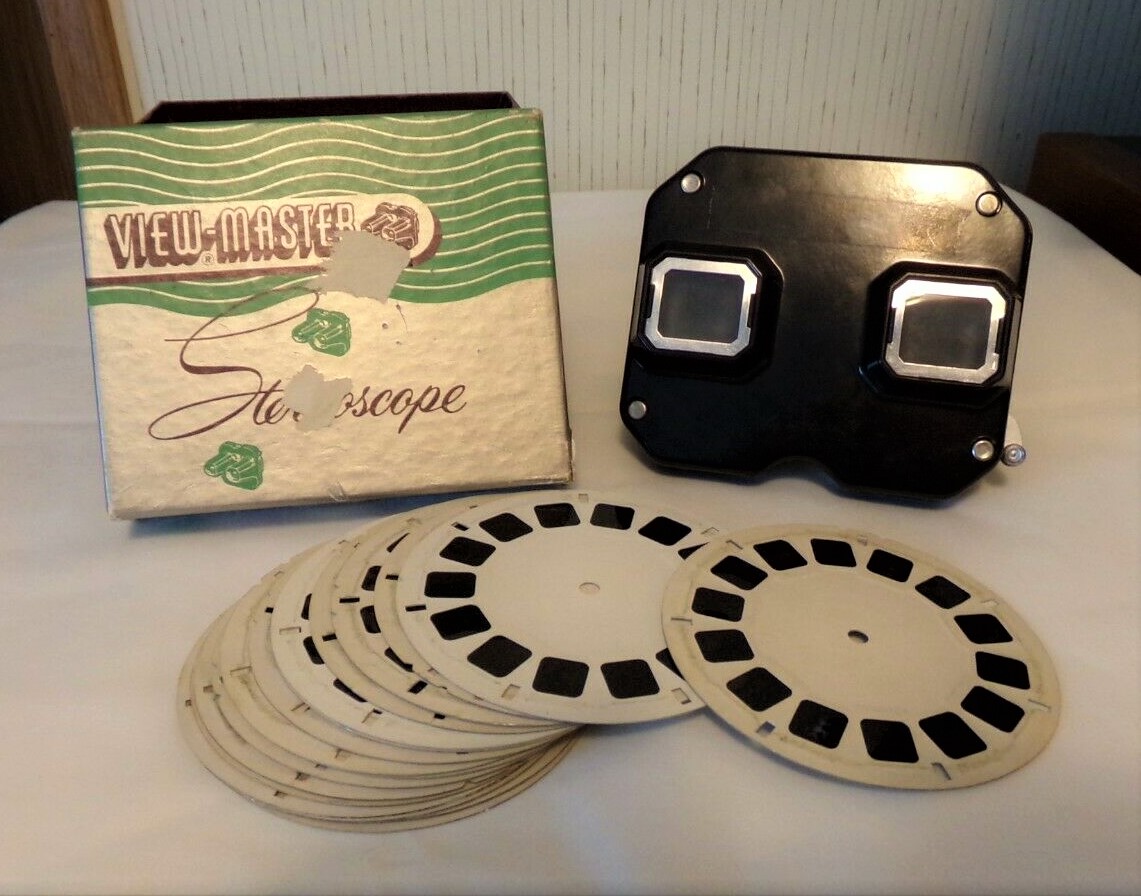
When I was a child, around the age of 7 or 8, my parents bought me what was then a popular gadget. It was a stereoscopic slide viewer, called a ViewMaster. The pre-loaded slides came on paper reels that were rotated in the viewer by pulling on a lever mechanism. Being good Irish Catholic folk they included in the gift two reels with scenes of Ireland, especially of the area around Killarney, near my mother’s home, and a reel of scenes from the Vatican. Both of these subjects were fascinating to me, the Irish scenes because of my memories of the trip I had made as a 3-year old and the Vatican scenes because it was the center of the Catholic Church.
One of the most fascinating slides on the Vatican reel was a scene of the interior of St. Peter’s Basilica, showing the full extent of the nave. And one of the things that most fascinated me and caused me to wonder was the glimpse it gave, far away, of a glowing, golden something on that distant end wall. What was it, I used to wonder. Unfortunately, no other photo on the wheel provided any further information.
View of the interior of St. Peter's similar to the one on the ViewMaster slide
It wasn’t till many years later, as a graduate student, that I found the amazing answer. It is one of the most audacious, amazing, astonishing and monumental pieces of conceptual art ever attempted and the work of that genius of the Baroque, Gianlorenzo Bernini. It is also one of the most meaning-filled masterpieces of the art of sculpture ever executed. Further, it is the place where the history of art, the history of the Church and the mystery of the Holy Spirit intersect.
Gianlorenzo Bernini, Cathedra Petri Italian, c. 1656-1666 Vatican, St. Peter's Basilica Photo: Ondra Havala
It is the great Cathedra Petri, the Chair of Peter, completed in 1666. For it, Bernini used every talent and trick that he possessed, illuminated by his solid Catholic faith, and the effect is mind boggling. Indeed, when I went to Rome for the first time in 1988 I was terrified of the effect that seeing it might have on me. I longed for someone to accompany me, since I was afraid that I might faint or start shouting for joy or perhaps even levitate. In the event, I did go alone and I survived, earthbound, partly due to the impact of being surrounded by strangers. Nonetheless my heart sang and it remains a memorable event. But, exactly what is it about this work of art that caused this fear of being overwhelmed with emotion?
Simply put, the Cathedra Petri is a giant reliquary. It is not as big or as grand as the Sainte Chapelle, built by St. Louis (Louis IX) of France to house the Crown of Thorns and a fragment of the True Cross. However, that beautiful building, while indeed grand and emotionally intense , though somewhat aloof, still does not elicit such a strong reaction. It does not truly overwhelm. Perhaps this comes from the fact that the onlooker stands within it and not outside of it, it surrounds us and we become a part of it. Not so with the Cathedra. We stand outside of it and can, therefore, be overwhelmed by it.
Ninth Century Chair Encased in the Cathedra Petri
Given by Charles the Bald to the Vatican in 875
The relic which the Cathedra preserves and protects is a chair. We now know that it is a ninth-century wooden chair, given to the Vatican by the Holy Roman Emperor Charles the Bald (grandson of the Emperor Charlemagne) in 875 and later covered in Byzantine ivory plaques. However, by the mid-seventeenth century, almost nine hundred years later, when Bernini was commissioned to execute the reliquary for it, the true date of the chair had been lost and it was sincerely believed to be the actual first-century chair from which St. Peter had taught when in Rome. Peter's chair is known to have existed, but may have been destroyed sometime before the gift of this chair by the Emperor, probably during the multiple disturbances that followed the disintegration of the Roman Empire in the West. It was, therefore, seen as an actual, physical link with the Apostle and first Pope.
Simply stated, in fact grossly oversimplified, Bernini’s concept for the monument presents the bronze reliquary, in the form of the object it contains, that is, a chair, borne on gilded stucco clouds. It is connected to bronze figures of four of the Fathers of the Church, two from the Latin Church (Saints Augustine and Ambrose) and two from the Greek Church (Saints Athanasius and John Chrysostom). The two Latin Fathers wear the miter, the insignia of bishops in the Latin Rite. Above and around the chair are swarms of golden stucco angels and above it is a stained glass window in which the figure of the Holy Spirit as a dove appears, surrounded by beams of golden light.
Another view of the Cathedra Petri
Gianlorenzo Bernini, Chair Reliquary From the Cathedra Petri
Italian, c, 1656-1666
Vatican, St. Peter's Basilica
Gianlorenzo Bernini, Model for the Cathedra Petri
Included in the exhibition Bernini: Sculpting in Clay
at the Metropolitan Museum of Art
New York, October 3, 2012 - January 6, 2013
Gianlorenzo Bernini, St. Ambrose and St. Athanasius From the Cathedra Petri
Italian, c. 1656-1666
Vatican, St. Peter's Basilica
Gianlorenzo Bernini, St. John Chrysostom and St. Augustine From the Cathedra Petri
Italian, c. 1656-1666
Vatican, St. Peter's Basilica
In actuality, as viewed from the ground, the monument seems to exist in a reality located somewhere between solid materiality and amazing apparition. It appears to burst through the cold neutral marble of the walls of the apse in which it stands, with a brilliance and warmth and immediacy that is stunning. Its size is almost beyond imagining. Still photographs that lack a human presence can be misleading. It is only when the monument is seen with humans in the foreground that its true scale becomes clear. It is titanic.
Reuters photo taken during the procession from St. Peter's at the installation ceremony for Pope Benedict XVI on April 24, 2005. The Cathedra Petri can clearly be seen in this photograph, taken part way along the nave of the basilica. Its size can be judged pretty accurately from this.
Indeed, it is almost impossible to photograph it properly because of the scale. Pictures taken from a distance to capture its entirety cannot catch its details and vice versa. It is actually more of an experience than a “work of art”. Construction on it took ten years.
Some sense of the size of the work can be seen in this footage from Vatican TV (you can skip ahead a bit to eliminate some of the "talking heads" at the beginning).
Beyond the sheer scale of the piece is its intensity. Nothing about it is placid, every part is exultant, every detail sings a hymn of praise and joy.
The whole seems to burst forcefully through the wall, as it materializes before our eyes. The four bronze Fathers appear to be in states of ecstasy as they hold ribbons of bronze that descend to them from the chair. They do not support it, instead it energizes and enraptures them.
Gianlorenzo Bernini, St. Augustine
Italian, c. 1656-1666
Vatican, St. Peter's Basilica
Even the relief on the chair itself, the scene of the Risen Christ’s command to Peter to “Feed My Sheep” is ecstatic.
Gianlorenzo Bernini, Feed My Sheep Bas Relief from the back of the chair reliquary Italian, c. 1656-1666 Vatican, St. Peter's Basilica
Cherubs triumphantly display the papal triple tiara above it.
Gianlorenzo Bernini, Cherubs support the triple tiara Italian, c. 1656-1666 Vatican, St. Peter's Basilica
Other angels tumble over each other as they respond ecstatically to the appearance of the dove symbol of the Holy Spirit.
As Rudolf Wittkower, the famous historian of Roman monuments, said of it “It is evident that a narrow and biased approach can never do justice to the Cathedra; it is precisely the union of traditionally separate and even contradictory categories that contributes to its evocative quality. Whatever his immediate reaction, close to the Cathedra the beholder finds himself in a world which he shares with saints and angels, and he is therefore submitted to an extraordinarily powerful emotional experience. A mystery has been given visual shape, and its comprehension rests on an act of emotional participation rather than on one of rational interpretation.”1
Glimpsed initially from the far off entrance to the basilica, seen framed by the gigantic bronze structure of Bernini’s immense baldacchino above the high altar, the Cathedra is the visual culmination of the entire basilica. Although intended by Michelangelo to be one of several equally important chapels in the original, Greek cross, plan for St. Peter’s, the status of this chapel changed when the opposite “arm” was extended into the current vast nave by Carlo Maderno at the beginning of the seventeenth century (1605-1612). From that point on, this location took on greater importance, assuming the more traditional role of apse in the now longitudinally oriented building. Bernini’s grand conception fulfilled this new purpose and became the focal point for the entire building. It is traditional to read this work from the bottom up, that is, as we ourselves experience it, from the Fathers to the chair reliquary, to the apparition of the Holy Spirit. However, the art historian extraordinaire for the work of Bernini, Irving Lavin, who opened my own eyes to the imaginative universe that undergirded the work of Bernini and of the entire Baroque, read it differently: “In Bernini's vision the Holy Spirit passes through the rear wall and expands as it descends to fill the apse of the church, ultimately to include the high altar framed by the Baldacchino and the distant viewer in its exultant embrace. The essential point of the ideology of the Cathedra Petri is the singularity and unity of the Church under the papacy …. The spiritual progression from the divine will to its earthly manifestation has its visual and physical analogue in an imperceptible progression from two-dimensional, translucent polychromy, representing the pure spirit, through progressively "lower" and increasingly three-dimensional orders of reality, to reach, ultimately, our own.”2
Watching as the Cardinals gathered in front of the Cathedra to pray for the enlightenment of the Holy Spirit upon their deliberations in preparing for the Conclave to elect a successor to Benedict XVI, I began to think that this is only part of the proper reading of Bernini’s intentions. He is telling us something very important in this work.
What I think he was trying to say is this: that it is the office, the Chair, and not the man who sits in it that counts. It is the office that receives the gifts of the Holy Spirit, it is the office that is upheld by the Spirit and the angels and the Fathers. The person on the chair is a passing thing, he comes and he goes through death or resignation, but the office endures and is upheld. It is the office that will never fail the Church, even though the individual sitting in it for the time may do so.
As each man in the long succession of popes sits in this Chair, this office, he participates in the outpouring of the Holy Spirit and is the visible guide for and defender of the earthly Church, its earthly Shepherd. However, he is also human and as a human being can sin and can make mistakes in governance. But, the true guide and protector of the Church and of the office is the Holy Spirit, who cannot err. This understanding of the papal office lies at the basis for the liturgical celebration of the feast of the Chair of Peter each year on February 22nd, established as early as the mid-fourth century.3 This is also the basis for the doctrine of papal infallibility. It is only when speaking formally ex cathedra, literally “from the chair” (i.e., from the office of pontiff) on matters of faith and morals that any pope is infallible. It is thus an office of immense responsibility and great seriousness.4
_______________________________________________
1. Wittkower, Rudolf. Gianlorenzo Bernini, The Sculptor of the Roman Baroque, London, Phaidon Press, 1966, p.20.
2. Lavin, Irving. “Bernini at St. Peter’s: Singularis In Singulis, In Omnibus Unicus”, from St. Peter’s in the Vatican, ed. William Tronzo, New York, Cambridge University Press, 2005, pp. 155-159.
3. “Chair of Peter”, in Catholic Encyclopedia (1917) cited from http://www.newadvent.org/cathen/03551e.htm Readings for the liturgy on the feast of the Chair of Peter can be found at http://www.usccb.org/bible/readings/022213.cfm
4. Cathechism of the Catholic Church, Part 1, Section 2, Chapter 3, Article 9, Paragraph 4, Number 891 (online at http://www.vatican.va/archive/ENG0015/__P2A.HTM)