Tuesday, March 26, 2013

A Joyful Noise

Marie, the great new bourdon of Notre Dame, one of
nine newly founded bells to join, Emmanuel, the other bourdon
and sole survivor of the pre-1789 ring.   
Back at the beginning of February I noted the joyful and evocative dedication of new bells for the Cathedral of Notre Dame de Paris (Something you don't see every day!).  This past weekend the bells rang out over Paris for the very first time and they were given a really big welcome. 


It's very moving as, one by one, each new bell joins the chorus, starting with Jean-Marie, the smallest, and continuing until the last and oldest bell, the great bourdon, Emmanuel, which is the only bell to survive the French Revolution, joins in.  They make a tremendous and joyful noise for the Lord. 

The Sorrowful Mysteries


Lorenzo Lotto, Madonna of the Rosary
Italian, ca. 1539
Cigoli, Church of San Nicolo
This painting shows Mary giving the Rosary to Saint 
Dominic, who is accompanied by other saints.  Above the Virgin 
and Child are medallions depicting the traditional fifteen Mysteries 
of the Rosary. The Sorrowful Mysteries are the five scenes in the 
middle of the group.


Some years ago, when Mel Gibson's film “The Passion of the Christ” was first released, I noticed a striking difference between the reactions of Protestant and Catholic friends and co-workers.  Whereas the Catholics among them found the violence of the depiction of Christ’s Passion to be upsetting but basically what was expected, some Protestants found the same violence deeply shocking.  More than once I heard an acquaintance say in effect “I never realized what it meant”. 

I gave quite a lot of thought to the possible reasons behind this diversity in how the two Christian groups saw the brutality of the film.  I eventually came to the conclusion that it results from a difference between the ways Catholics and Protestants have looked at the events of His life between the entrance into Jerusalem on Palm Sunday and the Resurrection on Easter Sunday. 

Catholics and some related Protestant groups, such as Anglicans/Episcopalians and Lutherans, call this period Holy Week and follow its multiple movements with similar intensity.  For Catholics at least, it involves not only two distinct readings of the Passion (on Palm Sunday from one of the three Synoptic Gospels in a yearly rotation, on Good Friday always from the Gospel of John), underscored by such liturgical actions as the stripping of the altars following the Holy Thursday Mass and the veneration of the Cross on Good Friday.  Those Protestant groups that are traditionally more radical in their rejection of “Popish” ways, Baptists for example, tend to skip over this week entirely and appear to arrive at Easter without ever having contemplated the means by which Jesus died in order to rise.

But, there is more to these distinctions than just the contemplation of the events the Passion during one week each year.  There is, for instance, the obvious difference in the form of the Cross displayed by Catholics and Protestants:  between the Catholic crucifix, the cross with the body of the Savior, and the Protestant plain cross.  Catholics also have a series of devotional practices that, when used, can bring these same events to mind over and over, all year long.  Among them are the Rosary and the Stations of the Cross.

The word “Rosary” refers both to the form of prayer and to the string of beads on which the prayers it consists of are counted.  Most people know that the Rosary  bead chain consists of groups of ten Hail Marys, punctuated by the Our Father and the Glory Be.  These groups of ten are called “decades”, from the Latin word for ten.  Each “decade” consists of one Our Father, the ten Hail Marys and one Glory Be.  The Rosary bead chain consists of five such "decades". 

There are twenty “Mysteries” (at least since the institution of the “Luminous Mysteries” by Pope Saint John Paul II, prior to that there were fifteen) in a full Rosary prayer.  Each group of “Mysteries” focuses on five New Testament events, offering five focal points for the minds of those who are praying. 
  • The Joyful Mysteries focus on the events of the Birth and Childhood of Christ (the Annunciation, the Visitation, the Birth of Jesus, The Flight into Egypt and the Finding of Jesus in the Temple at Age 12). 
  • The Luminous Mysteries focus on events from the adult life of Jesus prior to the Passion (the Baptism of Jesus, the Wedding at Cana, the Proclamation of the Kingdom, the Transfiguration of Jesus, the Institution of the Eucharist). 
  • The Sorrowful Mysteries, which we will begin examining today, focus on the events of the Passion of Jesus (the Agony in the Garden, the Scourging at the Pillar, the Crowning with Thorns, the Carrying of the Cross and the Crucifixion). 
  • The Glorious Mysteries focus on the Resurrection and events following it (The Resurrection, the Ascension, the Descent of the Holy Spirit, the Assumption of the Virgin Mary and her Coronation as Queen of Heaven). 
The Rosary is a form of prayer that is very flexible.  One can pray one decade at a time, or five decades at a time, or even all twenty decades at one session.  The recitation is traditionally spread over several days, with the Joyful Mysteries being recited on Mondays and Saturdays, the Sorrowful Mysteries on Tuesdays and Fridays, the Luminous Mysteries on Thursdays and the Glorious Mysteries on Sundays and Wednesdays.

In 2011 I looked at the works of Giotto in the Arena Chapel as they reflected the events of Holy Week.  Last year I looked at several images of Jesus that can be seen as meditations on the Passion.  This year I will look at the events of the Passion as reflected by the Sorrowful Mysteries of the Holy Rosary.

Links to the individual Sorrowful Mysteries:

The First Sorrowful Mystery – The Agony in the Garden


© M. Duffy, 2013


Tuesday, March 19, 2013

Fisher of Men

Girogio Vasari, Calling of St. Peter and St. Andrew
Italian, no date (lived 1511 - 1574)
Vatican City, Apostolic Palace
Former Room of the Swiss Guard
As he was walking by the Sea of Galilee, he saw two brothers, Simon who is called Peter, and his brother Andrew, casting a net into the sea; they were fishermen.

He said to them, “Come after me, and I will make you fishers of men.”

At once they left their nets and followed him. (Matttew 4: 18-20)

In a few hours the Church will celebrate the inauguration of the Petrine Ministry of our new Pope, Francis, with a Mass in honor of St. Joseph, the patron of the universal church.

When a person attends a papal Mass or other ceremony at St. Peter’s you are given a small and rather beautiful booklet containing the liturgical prayers and readings and music, produced by the Office for the Liturgical Celebrations of the Supreme Pontiff and printed by the Vatican Publishing House. It is simple, white paper with black and red ink in the printing with white covers, perfect bound (i.e., bound like a book, not stapled down the spine). What makes it beautiful is the cover. A work of art from the Vatican collection is printed on the cover, different works for each of the ceremonies.

Today’s booklet can be found online at http://www.vatican.va/news_services/liturgy/libretti/2013/20130319_inizio-ministero-petrino.pdf
However, one detail of the actual printed booklet is never available online -- the cover. The cover for the inauguration of the Roman Pontiff on March 19, 2013 features the painting above, the Calling of St. Peter by the late Mannerist painter Giorgio Vasari.  In the painting we see, as it were, two scenes from the same act.  In the upper background, Andrew points out the approaching Jesus to his brother, Simon.  The Sea of Galilee is seen in the background, along with buildings that represent the town of Capernaum, their home.  In the foreground we see the encounter of the two brothers with Jesus. as He tells them to follow him as He goes forward. 

Vasari was a prolific painter, responsible for much of the decorative painting in late 16th century Florence and Rome. His training and background comes out of the circle of the Tuscan artistic community and especially the greatest of its members, Michelangelo, who was still alive for most of Vasari’s own lifetime. He was also a highly regarded architect in his own time.

But his greatest influence in history, far beyond that of his own works of architecture or of painting, is his work in words. He is the author of the first attempt to create a history of how the painting of his own day came to be. Called Le Vite de’ piu eccellenti pittori, scultori, ed architettori (Lives of the Most Eminent Painters, Sculptors, and Architects) it continues to be a valuable source for us today. On account of this work he is regarded as the “Father of Art History”.

As the Church joyfully welcomes its new Shepherd we can see in the cover of this little liturgical booklet deep connections that unite the first century Peter, the first Pope, through the centuries during which the chants it includes were introduced under Peter’s 64th successor, Gregory the Great, the painting on the cover was done under one of the late 16th century Popes (the 224th through 226th successors) and the inauguration of, Francis, the 267th successor of the Rock (Petrus/Peter).

Around the dome of St. Peter’s Basilica is written in letters of gold the words of Jesus from the Gospel of Matthew: “Tu es Petrus et super hanc petram aedificabo ecclesiam meam et portae inferi non praevalebunt adversum eam et tibi dabo claves regni caelorum.” (And I tell you, you are Peter, and on this rock I will build my church, and the powers of death shall not prevail against it. I will give you the keys of the kingdom of heaven.) (Matthew 16:18-19)

These words will also be sung by the Sistine Chapel Choir several times, in different settings, during the ceremony and the following Mass. Welcome to the new “Rock” who comes to us, as he said himself, from “the ends of the earth”. As he receives the Fisherman’s Ring, may God grant him to be a great Fisher of Men.

Saturday, March 9, 2013

Chair of Peter

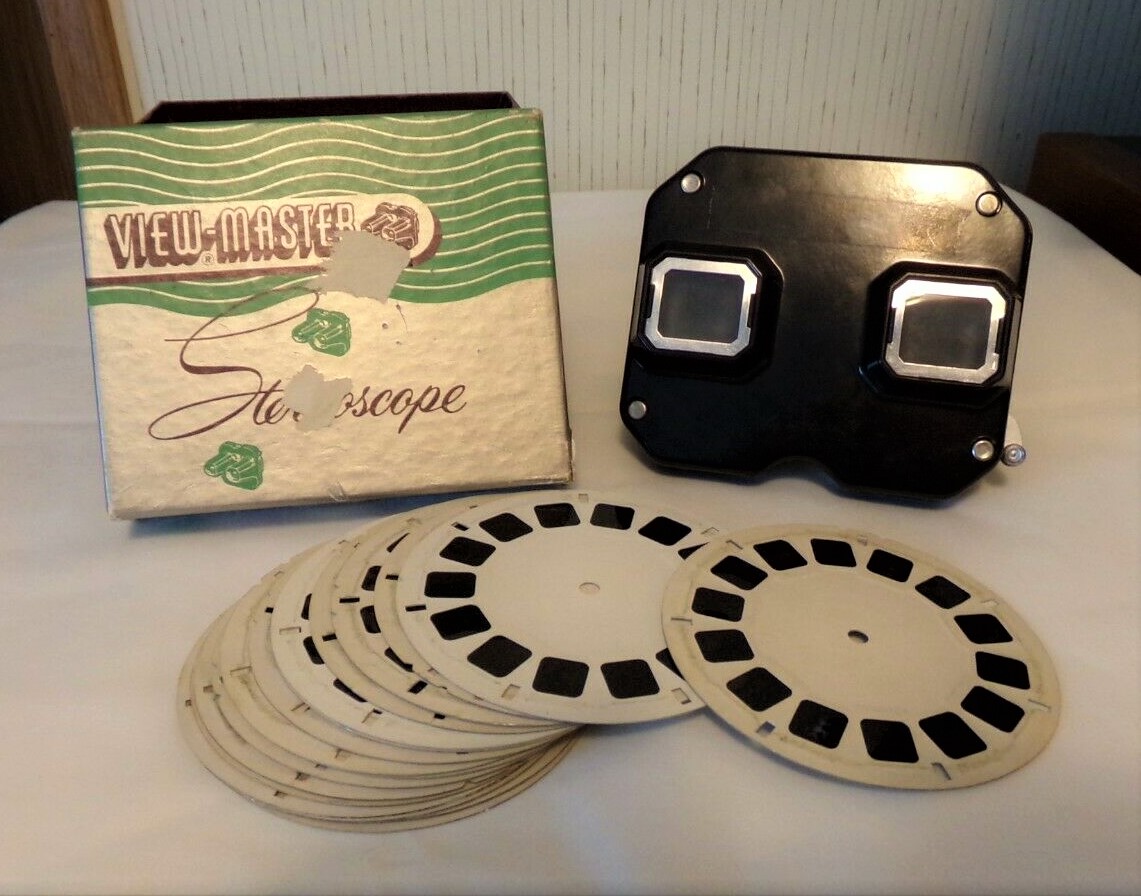
ViewMaster and reels, c. 1950-1960


When I was a child, around the age of 7 or 8, my parents bought me what was then a popular gadget. It was a stereoscopic slide viewer, called a ViewMaster. The pre-loaded slides came on paper reels that were rotated in the viewer by pulling on a lever mechanism. Being good Irish Catholic folk they included in the gift two reels with scenes of Ireland, especially of the area around Killarney, near my mother’s home, and a reel of scenes from the Vatican. Both of these subjects were fascinating to me, the Irish scenes because of my memories of the trip I had made as a 3-year old and the Vatican scenes because it was the center of the Catholic Church.


One of the most fascinating slides on the Vatican reel was a scene of the interior of St. Peter’s Basilica, showing the full extent of the nave. And one of the things that most fascinated me and caused me to wonder was the glimpse it gave, far away, of a glowing, golden something on that distant end wall. What was it, I used to wonder. Unfortunately, no other photo on the wheel provided any further information.

View of the interior of St. Peter's similar to the one on the ViewMaster slide

It wasn’t till many years later, as a graduate student, that I found the amazing answer. It is one of the most audacious, amazing, astonishing and monumental pieces of conceptual art ever attempted and the work of that genius of the Baroque, Gianlorenzo Bernini. It is also one of the most meaning-filled masterpieces of the art of sculpture ever executed.   Further, it is the place where the history of art, the history of the Church and the mystery of the Holy Spirit intersect.

Gianlorenzo Bernini, Cathedra Petri
Italian, c. 1656-1666
Vatican, St. Peter's Basilica
Photo: Ondra Havala

It is the great Cathedra Petri, the Chair of Peter, completed in 1666. For it, Bernini used every talent and trick that he possessed, illuminated by his solid Catholic faith, and the effect is mind boggling. Indeed, when I went to Rome for the first time in 1988 I was terrified of the effect that seeing it might have on me. I longed for someone to accompany me, since I was afraid that I might faint or start shouting for joy or perhaps even levitate. In the event, I did go alone and I survived, earthbound, partly due to the impact of being surrounded by strangers. Nonetheless my heart sang and it remains a memorable event. But, exactly what is it about this work of art that caused this fear of being overwhelmed with emotion?

Simply put, the Cathedra Petri is a giant reliquary. It is not as big or as grand as the Sainte Chapelle, built by St. Louis (Louis IX) of France to house the Crown of Thorns and a fragment of the True Cross.  However, that beautiful building, while indeed grand and emotionally intense , though somewhat aloof, still does not elicit such a strong reaction. It does not truly overwhelm. Perhaps this comes from the fact that the onlooker stands within it and not outside of it, it surrounds us and we become a part of it. Not so with the Cathedra. We stand outside of it and can, therefore, be overwhelmed by it.
 

Ninth Century Chair Encased in the Cathedra Petri
Given by Charles the Bald to the Vatican in 875

The relic which the Cathedra preserves and protects is a chair. We now know that it is a ninth-century wooden chair, given to the Vatican by the Holy Roman Emperor Charles the Bald (grandson of the Emperor Charlemagne) in 875 and later covered in Byzantine ivory plaques. However, by the mid-seventeenth century, almost nine hundred years later, when Bernini was commissioned to execute the reliquary for it, the true date of the chair had been lost and it was sincerely believed to be the actual first-century chair from which St. Peter had taught when in Rome. Peter's chair is known to have existed, but may have been destroyed sometime before the gift of this chair by the Emperor, probably during the multiple disturbances that followed the disintegration of the Roman Empire in the West.  It was, therefore, seen as an actual, physical link with the Apostle and first Pope.

Simply stated, in fact grossly oversimplified, Bernini’s concept for the monument presents the bronze reliquary, in the form of the object it contains, that is, a chair, borne on gilded stucco clouds. It is connected to bronze figures of four of the Fathers of the Church, two from the Latin Church (Saints Augustine and Ambrose) and two from the Greek Church (Saints Athanasius and John Chrysostom). The two Latin Fathers wear the miter, the insignia of bishops in the Latin Rite. Above and around the chair are swarms of golden stucco angels and above it is a stained glass window in which the figure of the Holy Spirit as a dove appears, surrounded by beams of golden light.

Another view of the Cathedra Petri


Gianlorenzo Bernini, Chair Reliquary
From the Cathedra Petri
Italian, c, 1656-1666
Vatican, St. Peter's Basilica
Gianlorenzo Bernini, Model for the Cathedra Petri
Included in the exhibition
Bernini:  Sculpting in Clay
at the Metropolitan Museum of Art
New York, October 3, 2012 - January 6, 2013

Gianlorenzo Bernini, St. Ambrose and St. Athanasius
From the Cathedra Petri
Italian, c. 1656-1666
Vatican, St. Peter's Basilica

Gianlorenzo Bernini, St. John Chrysostom and St. Augustine
From the Cathedra Petri
Italian, c. 1656-1666
Vatican, St. Peter's Basilica

In actuality, as viewed from the ground, the monument seems to exist in a reality located somewhere between solid materiality and amazing apparition. It appears to burst through the cold neutral marble of the walls of the apse in which it stands, with a brilliance and warmth and immediacy that is stunning. Its size is almost beyond imagining. Still photographs that lack a human presence can be misleading. It is only when the monument is seen with humans in the foreground that its true scale becomes clear. It is titanic.

Reuters photo taken during the procession from St. Peter's at the installation ceremony for Pope Benedict XVI on April 24, 2005.  The Cathedra Petri can clearly be seen in this photograph, taken part way along the nave of the basilica.  Its size can be judged pretty accurately from this.

Indeed, it is almost impossible to photograph it properly because of the scale. Pictures taken from a distance to capture its entirety cannot catch its details and vice versa. It is actually more of an experience than a “work of art”. Construction on it took ten years.

Some sense of the size of the work can be seen in this footage from Vatican TV (you can skip ahead a bit to eliminate some of the "talking heads" at the beginning).

Beyond the sheer scale of the piece is its intensity. Nothing about it is placid, every part is exultant, every detail sings a hymn of praise and joy.

The whole seems to burst forcefully through the wall, as it materializes before our eyes. The four bronze Fathers appear to be in states of ecstasy as they hold ribbons of bronze that descend to them from the chair. They do not support it, instead it energizes and enraptures them.

Gianlorenzo Bernini, St. Augustine
Italian, c. 1656-1666
Vatican, St. Peter's Basilica

Even the relief on the chair itself, the scene of the Risen Christ’s command to Peter to “Feed My Sheep” is ecstatic.

Gianlorenzo Bernini, Feed My Sheep
Bas Relief from the back of the chair reliquary
Italian, c. 1656-1666
Vatican, St. Peter's Basilica

Cherubs triumphantly display the papal triple tiara above it.

Gianlorenzo Bernini, Cherubs support the triple tiara
Italian, c. 1656-1666
Vatican, St. Peter's Basilica

Other angels tumble over each other as they respond ecstatically to the appearance of the dove symbol of the Holy Spirit.


As Rudolf Wittkower, the famous historian of Roman monuments, said of it “It is evident that a narrow and biased approach can never do justice to the Cathedra; it is precisely the union of traditionally separate and even contradictory categories that contributes to its evocative quality. Whatever his immediate reaction, close to the Cathedra the beholder finds himself in a world which he shares with saints and angels, and he is therefore submitted to an extraordinarily powerful emotional experience. A mystery has been given visual shape, and its comprehension rests on an act of emotional participation rather than on one of rational interpretation.”1


Glimpsed initially from the far off entrance to the basilica, seen framed by the gigantic bronze structure of Bernini’s immense baldacchino above the high altar, the Cathedra is the visual culmination of the entire basilica. Although intended by Michelangelo to be one of several equally important chapels in the original, Greek cross, plan for St. Peter’s, the status of this chapel changed when the opposite “arm” was extended into the current vast nave by Carlo Maderno at the beginning of the seventeenth century (1605-1612). From that point on, this location took on greater importance, assuming the more traditional role of apse in the now longitudinally oriented building. Bernini’s grand conception fulfilled this new purpose and became the focal point for the entire building.

It is traditional to read this work from the bottom up, that is, as we ourselves experience it, from the Fathers to the chair reliquary, to the apparition of the Holy Spirit. However, the art historian extraordinaire for the work of Bernini, Irving Lavin, who opened my own eyes to the imaginative universe that undergirded the work of Bernini and of the entire Baroque, read it differently: “In Bernini's vision the Holy Spirit passes through the rear wall and expands as it descends to fill the apse of the church, ultimately to include the high altar framed by the Baldacchino and the distant viewer in its exultant embrace. The essential point of the ideology of the Cathedra Petri is the singularity and unity of the Church under the papacy …. The spiritual progression from the divine will to its earthly manifestation has its visual and physical analogue in an imperceptible progression from two-dimensional, translucent polychromy, representing the pure spirit, through progressively "lower" and increasingly three-dimensional orders of reality, to reach, ultimately, our own.”2


Watching as the Cardinals gathered in front of the Cathedra to pray for the enlightenment of the Holy Spirit upon their deliberations in preparing for the Conclave to elect a successor to Benedict XVI, I began to think that this is only part of the proper reading of Bernini’s intentions. He is telling us something very important in this work.

What I think he was trying to say is this: that it is the office, the Chair, and not the man who sits in it that counts. It is the office that receives the gifts of the Holy Spirit, it is the office that is upheld by the Spirit and the angels and the Fathers. The person on the chair is a passing thing, he comes and he goes through death or resignation, but the office endures and is upheld. It is the office that will never fail the Church, even though the individual sitting in it for the time may do so. 

As each man in the long succession of popes sits in this Chair, this office, he participates in the outpouring of the Holy Spirit and is the visible guide for and defender of the earthly Church, its earthly Shepherd.  However, he is also human and as a human being can sin and can make mistakes in governance.  But, the true guide and protector of the Church and of the office is the Holy Spirit, who cannot err. This understanding of the papal office lies at the basis for the liturgical celebration of the feast of the Chair of Peter each year on February 22nd, established as early as the mid-fourth century.3 This is also the basis for the doctrine of papal infallibility. It is only when speaking formally ex cathedra, literally “from the chair” (i.e., from the office of pontiff) on matters of faith and morals that any pope is infallible. It is thus an office of immense responsibility and great seriousness.4 
_______________________________________________
1. Wittkower, Rudolf. Gianlorenzo Bernini, The Sculptor of the Roman Baroque, London, Phaidon Press, 1966, p.20.

2. Lavin, Irving. “Bernini at St. Peter’s: Singularis In Singulis, In Omnibus Unicus”, from St. Peter’s in the Vatican, ed. William Tronzo, New York, Cambridge University Press, 2005, pp. 155-159.

3. “Chair of Peter”, in Catholic Encyclopedia (1917) cited from http://www.newadvent.org/cathen/03551e.htm  Readings for the liturgy on the feast of the Chair of Peter can be found at http://www.usccb.org/bible/readings/022213.cfm

4.  Cathechism  of the Catholic Church, Part 1, Section 2, Chapter 3, Article 9, Paragraph 4, Number 891 (online at http://www.vatican.va/archive/ENG0015/__P2A.HTM)

© M. Duffy, 2013


Tuesday, March 5, 2013

“I do not abandon the cross, but remain in a new way near to the Crucified Lord”

Last Blessing of Benedict XVI as Pope
Castel Gandolfo, February 28, 2013
These are among the last words from Pope Benedict XVI, as Pope, spoken during his last General Audience on Wednesday, February 27, 2013. He was trying to convey to the Church and to the world that his renunciation of the Petrine Office does not mean that he will return to his ordinary, pre-papal life. Rather, he is withdrawing to a life of intense prayer and reflection for the good of the Church and the world, realizing that prayer is often as (or even more) important than action, that Mary has "chosen the better part" than Martha (Luke 10:42).

His words bring to mind such a flood of images that I must comment on some of them.

Jean Bourdichon, St. Anthony Abbot
Grands Heures of Anne de Bretagne
French, Tours, 1503-1508
Paris, Bibliotheque Nationale de France
MS Latin 9474, Vol. 193v.
First of all, it appears to me that his intent is to withdraw into a form of desert experience. Like the Desert Fathers and Mothers, such as St. Anthony Abbot, or like St. Benedict himself, he withdraws to a quiet place to pray, free from the distractions and cares of the world, even if that world is the governance of the Church.

Il Sodoma, Scene from Life of St. Benedict
Italian, 1505-1508
Monteoliveto Maggiore, Abbey


Skellig Michael
County Kerry, Ireland


There is also, in his choice of wording, a hint of the concept of “white” or “blue” martyrdom. These designations signify alternative forms of martyrdom to the shedding of blood, the “red” martyrdom. Historically speaking, once the period of intense persecution had ended ardent souls, no longer candidates for “red” martyrdom, sought other ways to assure salvation for themselves and others. In North Africa they did this through withdrawal to the desert, in Mediterranean Europe they withdrew to caves in the countryside, in Ireland they withdrew to wild places like Glendalough or to remote islands offshore like Skellig Michael. They also undertook intense ascetic practices of prayer and fasting. This surely lies in the background of Pope Benedict’s withdrawal.

Fra Angelico, St. Dominic Before the Crucifix
Italian, 1442
Florence, Convent of San Marco
Further, the statement that he will “remain in a new way near to the Crucified Lord” calls to mind Fra Angelico’s image of St. Dominic at the foot of the Cross from the walls of the Convent of San Marco in Florence. This (and similar) images are not to be read as “reports of reality”. We are meant to see them as visions of visions. For the Dominicans of San Marco, sons of St. Dominic, it was a reminder of the powerful prayer of their Founder in his adoring contemplation of the Crucified Lord.

Antonello da Messina, St. Jerome
Italian, ca, 1460
London, National Gallery


And finally, we know that the Pope will spend his remaining years, not just in prayer, but also in study. This brings to mind images of scholar saints, such as St. Jerome. The image of St. Jerome (often anachronistically shown wearing the robes of a Cardinal) in his study was a favorite image of the Renaissance, appearing in the work of numerous artists, both north and south.
Albrecht Durer, St. Jerome In His Study
German, 1514


El Greco, St. Jerome
Spanish, 1600-1614
New York, Metropolitan Museum of Art


But we also need to remember that another image of Jerome, equally popular, was that of the “white” martyr. In many of these images he is shown in the desert, often before or even embracing the Cross.
Filippino Lippi, St. Jerome in the Desert
Italian, 1490s
Florence, Ufizzi Gallery

Cima da Conegliano, St. Jerome in the Desert
Italian, 1495
Budapest, National Museum


Georges de la Tour, St. Jerome
French, 1620-1635
Genoble, Musee de Grenoble
Gianlorenzo Bernini, St. Jerome
Italian, 1661-1663
Sienna, Cathedral, Chigi Chapel


All of these images remind us that withdrawal into a “desert”, be it an actual desert or an interior one, is not uncommon in the history of Christianity. It would seem that the Pope Emeritus has chosen to join the ranks of these heroes of the faith.


His very last words, spoken from the balcony at Castel Gandolfo, were “Grazie. Buona notte. Grazie per tutti”. I would like to echo them, with a slight change. “Thank you, Holy Father. May your remaining years be fruitful. Thank you for everything.”
Among the very last photos taken of Pope Benedict
following his farewell blessing
Castel Gandolfo, February 28, 2013
_________________________________________
P.S. There is a really nice 62-page tribute booklet to Pope Benedict XVI, produced by L’Osservatore Romano online at http://www.vatican.va/bxvi/omaggio/index_en.html It includes wonderful pictures (many of which I have never seen before) and quotations from his writings. Plus, you can link from a quotation to the full text from which it is drawn.

Wednesday, February 27, 2013

The Persistence of the Middle Ages

Close up of "Marie" the new Great Bell of
Notre Dame de Paris, 2012
Dedicated February 2, 2013
Over this past month of February 2013 I have been struck by the ways in which events and persons from the Middle Ages have inserted themselves into our 21st century consciousness.


The month began, as previously noted on this blog, with the dedication on February 2nd of nine new bells for the Cathedral of Notre Dame. The new bells are replacements for the original, medieval, bells, cast in the late 14th century and destroyed during the French Revolution, and bring the ring of bells in the towers of Notre Dame back to their original, intended complement and function.

Two days later, on February 4th, the University of Leicester in Great Britain announced the identification of a skeleton, recently unearthed from underneath the municipal parking lot that replaced what was once the church of the Greyfriars, as the remains of King Richard III, who was killed at the Battle of Bosworth in 1485. The bones indicated that the person had suffered in life from a serious case of scoliosis (curvature of the spine) and had died from a number of wounds. 

Skeleton identified as that of Richard III
Leicester, UK, 2013
 
Various marks also suggested that the body had suffered a number of “humiliation” injuries after death. All of these findings pointed at the defeated king, who is the evil protagonist of Shakespeare’s play of the same name. The degree of scoliosis certainly verifies the historical reports that Richard had one shoulder higher than the other and suggests that he must have lived a life of almost constant pain as an adult. Comparison of DNA extracted from the bones with a sample collected from a Plantagenet descendant appears to match, further confirming the identification. 

Proposed reconstruction of the face of King Richard III

A portrait bust, built by a forensic sculptor on the basis of the bones, revealed a man whose face is consistent with, though younger and a bit better looking than the face we have come to know from the surviving copies of lost contemporary portraits. However, given that the art of portraiture was not yet well advanced at the time of Richard’s death this isn’t too surprising. Whether the man with this face could have been the ruthless child killer of Shakespeare’s play is an open question. Some will say that it is impossible. I’m not so sure. But that is not a question for this blog.

King Richard III
English, late 16th century copy of late 15rh century portrait
London, National Portrait Gallery

 The identification of the body has also led to a bit of a wrangle regarding the reburial. Both Leicester and York have vied for the “honor”. Leicester proposing itself as the original burial place, York proposing that it was the place of his original intention. Leicester has won the battle. Then there has been a controversy about what rites should be used for the reburial. Richard lived and died a Catholic Christian. The Reformation of Henry VIII was still two monarchs and 50 years in the future in 1485. Leicester Cathedral is currently a church of the Church of England. It appears that the University will handle the burial at Leicester after an “interfaith” service, a most un-medieval idea!


Finally, only one week later, came Pope Benedict’s announcement that he is renouncing the Petrine Office, effective tomorrow. Like almost everyone else in the world I was stunned (or in that great, descriptive, British slang phrase “I was gob smacked!”). Knowing, as I do, a good deal about the medieval world I knew, of course, in the background, that this has happened before, but not since the end of the Middle Ages! So, here it was again, the intrusion of the Middle Ages into the 21st century world! Much has changed in the world since the two medieval renunciations, but much remains the same. 


I thought it might be interesting to note that Pope Saint Celestine V (who resigned in 1294 for reasons of age and unsuitability) and Pope Gregory XII (who resigned in 1415 in order to resolve the impasse of the Great Schism) both lived for two years following their renunciation of the Chair of Peter. However, since the Renaissance a papal abdication has become unimaginable, until this extremely bold move.

There is, at this junction, a sense of sadness, of sympathy, of gratitude and of love brought to one’s mind and heart by this action of the Holy Father. I am awed by his humility and also by his profoundly clear-eyed rationality, characteristics that have been so evident during his pontificate. I will miss him more than I can say. I will miss his straightforward way of cutting to the heart of the message in his writing and speaking. And, as an art historian, I appreciate his frequent references to various works of art, demonstrating a very good visual memory. As a celebrant of dignified liturgies he has shown the way forward for many. And, as a musician he has surely had a profound influence on the formerly embarrassing quality of the music at St. Peter’s.

All these medieval intrusions in our modern world remind us that the past is never truly dead and gone. At any time it may come up and smack us in the face.